Paul F. Benne
March 2026 – Security Business Magazine
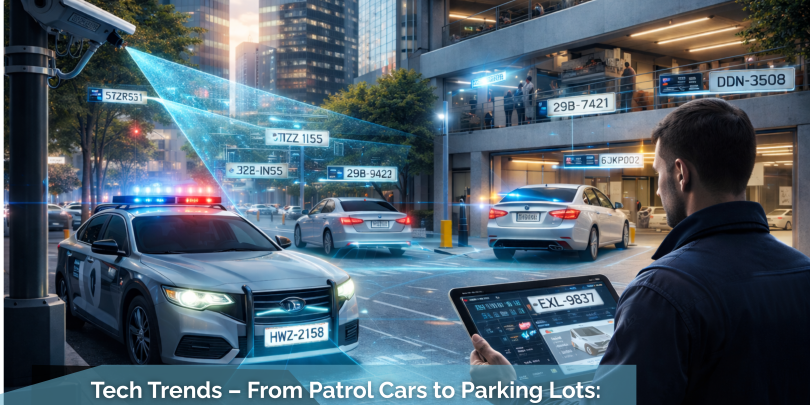
For years, license plate recognition (LPR) technology was viewed primarily as a law enforcement tool; mounted on patrol vehicles, fixed to traffic poles, and tied to stolen vehicle databases. In 2026, that perception is outdated. LPR has firmly established itself in the private sector, becoming a practical and increasingly strategic layer within commercial physical security systems. Retail centers, multi-family housing developments, healthcare campuses, logistics hubs, and even K–12 districts are deploying LPR not as a novelty, but as infrastructure.
For security integrators, this shift represents more than incremental product demand. It signals a maturation of LPR into a system that intersects with access control, investigations, operational workflows, and enterprise cybersecurity. Delivering successful deployments now requires technical rigor and strategic alignment, not simply mounting a specialized camera at a driveway.
The expansion of use cases is driving adoption. In retail environments, especially those grappling with organized retail crime (ORC), LPR provides a method for identifying repeat offenders and correlating vehicle activity with internal loss prevention data. When integrated properly with a video management system (VMS), investigators can search for partial or full plates, reconstruct timelines, and identify coordinated activity across multiple store locations. The value is not just in capturing a plate, but in making that data searchable and actionable.
In gated communities and multi-family housing environments, LPR is increasingly functioning as an operational credential. Instead of relying solely on RFID tags or proximity cards, property managers are using plate-based whitelisting to automate vehicle access. Residents expect gates to open reliably and without delay, which means integrators must design for low-latency reads, accurate recognition, and seamless integration with barrier controls. In this context, LPR performance directly affects resident satisfaction and perceived security effectiveness.
Industrial and logistics facilities are applying LPR in yet another way, workflow validation. Distribution centers are using plate reads to confirm scheduled truck arrivals, measure dwell times, and automate yard management notifications. Here, LPR becomes part of an operational technology ecosystem rather than a pure security tool. Integrators who understand API integrations and event-driven triggers are positioned to provide greater value than those delivering a standalone system.
Despite growing demand, LPR remains highly sensitive to system design. Successful deployments depend far more on engineering fundamentals than on manufacturer branding. Camera placement, lens selection, and environmental conditions play a decisive role in capture accuracy. Effective LPR systems rely on controlled capture zones, appropriate mounting angles, and vehicle speed management. Attempting to extract reliable plate reads from wide-angle overview cameras rarely produces acceptable results. Dedicated capture points, properly aligned optics, and thoughtful scene control remain essential to optimum performance.
Lighting is equally critical. Infrared illumination continues to be a cornerstone of consistent nighttime performance, but integrators must account for reflective plate materials, headlight glare, and environmental variables such as snow, rain, or dust. Seasonal changes can significantly impact performance if not addressed during design. Setting realistic read-rate expectations with clients, based on site conditions rather than marketing claims, is essential to maintaining credibility.
Edge processing has also changed the deployment landscape. Modern LPR cameras increasingly perform recognition at the device level, reducing bandwidth requirements and accelerating event triggers. This architecture can improve resilience during network disruptions and lower server overhead. However, edge intelligence introduces new responsibilities. Firmware lifecycle management, credential security, and network segmentation must align with enterprise IT policies. As LPR devices become IP endpoints generating structured data, cybersecurity considerations move to the forefront of project planning.
The greatest value emerges when LPR is integrated into broader security ecosystems. When tied into access control systems, a vehicle plate can function as a credential, triggering automatic gate operations or generating alerts when a blacklisted vehicle appears. Synchronization between watchlists and credential databases becomes critical. Integrators must evaluate API compatibility and ensure reliable data exchange between platforms.
Integration with VMS platforms further amplifies investigative capability. Searchable plate databases (www.rhombus.com and www.genetec.com) allow security teams to conduct wildcard queries, correlate vehicle movement across multiple sites, and reconstruct incidents with precision. In multi-location enterprises, centralized LPR management provides aggregated analytics that support both security and operational decision-making.
As adoption expands, privacy and compliance considerations are becoming more prominent. Unlike traditional video footage, LPR systems generate structured data that can be tied to identifiable individuals. Clients must define retention policies, access controls, and audit logging procedures. While integrators should not provide legal advice, they are increasingly expected to guide clients toward sound governance practices and recommend consultation with legal counsel when necessary.
Cybersecurity risk cannot be overlooked. Plate data represents sensitive movement information. Unauthorized access or data breaches could expose organizations to reputational and legal consequences. Strong authentication policies, encrypted data transmission, and role-based permissions are no longer optional. Integrators must treat LPR systems as enterprise assets subject to the same standards applied to other network-connected infrastructure.
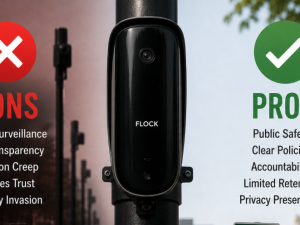
Another notable shift is the movement toward subscription-based and cloud-managed LPR platforms (www.flocksafety.com). These solutions offer centralized management, automatic updates, and multi-site aggregation, often lowering upfront capital investment. For integrators, this model creates recurring revenue opportunities but also elevates service expectations. Clients increasingly demand uptime assurances, cybersecurity compliance, and scalable analytics capabilities.
Perhaps the most significant challenge remains expectation management. Marketing materials frequently suggest near-perfect recognition rates, but real-world accuracy is influenced by plate condition, vehicle speed, environmental variables, and jurisdictional plate designs. Conducting thorough site assessments, performing pilot testing when appropriate, and clearly communicating achievable performance metrics are critical steps in maintaining long-term client trust.
LPR has evolved well beyond its origins in law enforcement patrol vehicles. It now plays a meaningful role in perimeter security, access automation, loss prevention, and operational intelligence across commercial markets. For security integrators, the opportunity is substantial. Those who approach LPR as a fully engineered, integrated, and cybersecurity-conscious system will distinguish themselves in an increasingly competitive landscape.
The future of LPR in the private sector will not be defined by hardware alone. It will be shaped by integrators who understand how to design for accuracy, intelligence, and manage data responsibly. As the technology becomes embedded in everyday security architecture, treating LPR as a strategic platform rather than a peripheral device will determine who leads the next phase of growth in the physical security industry.